When you think of a child at play—building with blocks, pretending to cook, or exploring outside—it might just look like fun. But in reality, play is serious learning. For young children, play is how they make sense of the world around them. At Childcare Genius Nola, we believe that play-based learning is one of the most effective, natural, and joyful ways to support early childhood development.
What is Play-Based Learning?
Play-based learning is an educational approach that uses play as the main way children explore, discover, and learn new concepts. Rather than focusing only on structured lessons or rote memorization, this method encourages children to learn through hands-on experiences that spark their curiosity and imagination.
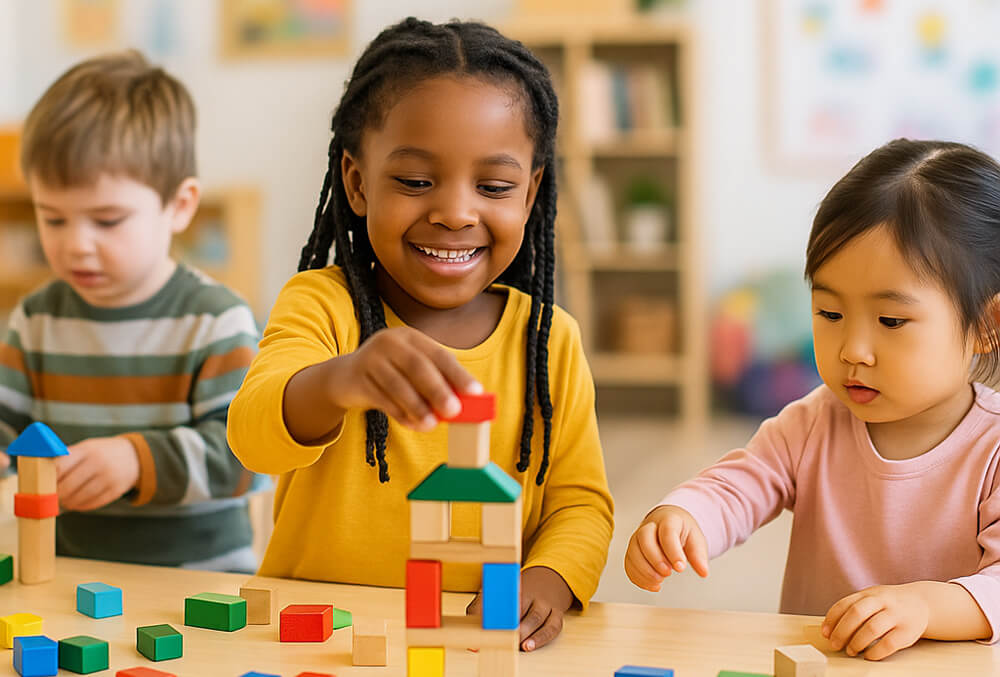
Whether it’s building a tower, playing house, or pretending to be a doctor, each activity becomes a rich opportunity for cognitive, social, and emotional growth.
The Benefits of Play-Based Learning
1. Builds Strong Brain Connections
Through open-ended play, children develop neural pathways that enhance memory, attention, and critical thinking. Activities like sorting, stacking, and problem-solving improve executive functioning and support lifelong learning skills.
2. Enhances Social and Emotional Skills
Playing with peers teaches cooperation, empathy, negotiation, and emotional regulation. Children learn how to take turns, express feelings, and resolve conflicts—all crucial skills for healthy relationships and school readiness.
3. Encourages Creativity and Imagination
Play invites children to think outside the box, invent new scenarios, and explore endless possibilities. This kind of imaginative thinking lays the foundation for innovation and flexible thinking later in life.
4. Supports Language and Communication
During pretend play or storytelling, children expand their vocabulary and develop more complex language skills. They learn to express ideas, ask questions, and follow multi-step directions.
5. Promotes Physical Development
Whether they’re climbing, running, or manipulating small toys, children build fine and gross motor skills through play. These physical activities strengthen coordination, balance, and body awareness.
What It Looks Like in the Classroom
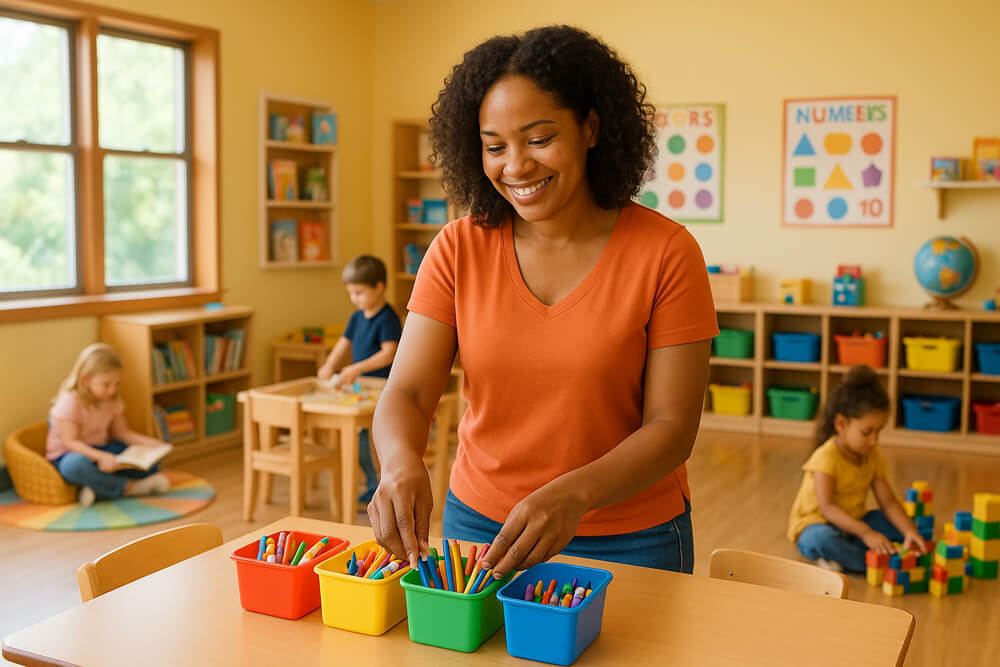
In a play-based learning environment, you’ll often see:
- Learning centers (blocks, art, dramatic play, science, etc.)
- Teacher-guided exploration with open-ended questions
- Freedom to choose activities based on interests
- Outdoor play that extends learning beyond the classroom
- Observation and assessment of development through play
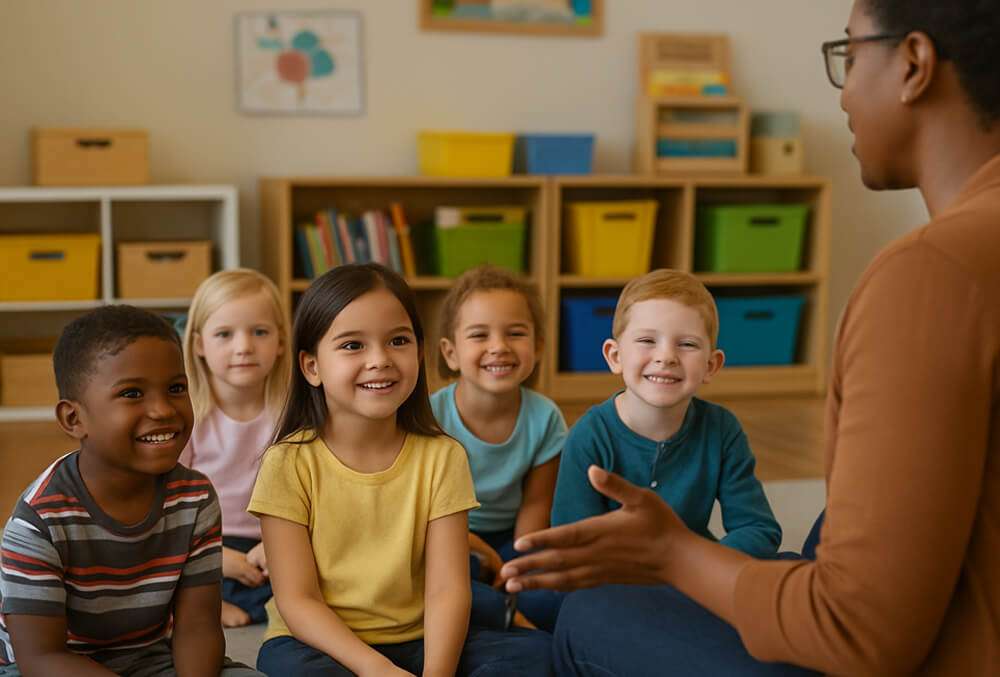
Educators act as facilitators, gently guiding children, asking open-ended questions, and introducing new vocabulary or challenges that deepen the learning experience.
How Parents Can Support Play at Home?
You don’t need fancy toys or a classroom setup to support play-based learning at home. Try:
- Creating a “yes” space where kids can explore freely
- Offering open-ended materials like blocks, scarves, or recycled items
- Reading books together and acting out the story
- Encouraging pretend play with dress-up clothes or stuffed animals
- Limiting screen time to allow more space for real-world exploration
Final Thoughts
Play-based learning isn’t just a trend—it’s a proven, research-backed approach that respects how young children naturally grow and develop. By embracing play, we’re not only teaching kids what to learn, but how to think, solve problems, and connect with the world around them.
At Childcare Genius Nola, we’re committed to creating joyful, enriching environments where children thrive through the power of play.